The Last Gentleman Adventurer – A Review

518cauhn9el-_sx335_bo1204203200_

I picked this book up when I purchased a bunch of wilderness exploration books several years ago.  The premise of a young English man being sent into the arctic tundra to live with, and trade with, the native people’s in northern Canada was intriguing.  What was even more interesting was the time period that this true story took place – the early 1930’s, when the Hudson Bay Company (referred to as the HBC) was still operating in the northern parts of the Hudson Bay area and northern Canada.

The narrative was written by Edward Beauclerk Maurice, who was only 17 years old when he was hired by the HBC.  Edward narrates his journey across the Atlantic, and his first posting, where he learned the the language of the Inuit natives.  He eventually became trustworthy enough that he was sent deeper into the wilderness to his own post, where he spent the next year alone with Inuit tribes trading furs with barely any contact with the outside world.

The story is unique and well told by Maurice, and offers up a glimpse of life as it was with the Inuit natives prior to their lives being changed by encroaching civilization and technology.  Maurice provides unique perspectives into the everyday lives of these people, and how they interacted with him and treated him.  He eventually became an accepted member of their local society, their trust such that he assisted with local disputes and was considered someone to whom they could bring problems to be solved.  What was amazing about this was that he was – at the time – younger than most of those who deferred to him!

For anyone wishing to read a unique, interesting story about the extreme north of Canada and the tribes that lived their, this is a book I highly recommend.

Survive!: My Fight for Life in the High Sierras – A Review

51k1b-p0q2bl-_sx333_bo1204203200_

Image courtesy of Amazon.com

I happened across this book when I was hunting for stories of real-life survival situations several years ago.  As this story occurred in the same areas I used to hike and camp near in the Sierra Nevada Mountains of S. California, it immediately grabbed my attention.  I bought a hardcover copy of the book and was reading it a few days later.

1280px-maule-mx-7-235-superrocket-g-iton-arp

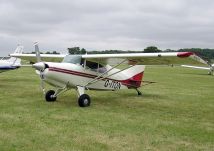
The Maule M7 Bush Plane

Initially, the story gripped me.  The author, Peter DeLeo, was flying his bush plane, a Maule M7, over the Sierra Nevadas near Kern Peak when the aircraft struck the trees and crashed.  He and his two friends were stranded in the wilderness at the onset of winter – DeLeo himself and one of his other passengers sustaining serious injuries (the third passenger had minor injuries).  Despite his injuries, DeLeo decided to hike out and try to find help.  For nearly a week he experienced a grueling trek through the winter mountains before climbing down the foothills of Olancha Peak and reporting his situation with a phone call from the Ranch House Cafe in Olancha (where, incidentally, I’ve eaten a few times).

Another reason this story attracted me was due to my own interest in aviation and, in particular, bush flying.  It was this interest that started to make me consider the story in a less than favorable light as the narrative continued.

To be sure, DeLeo’s account is nothing short of astounding.  That he managed to survive across the mountainous wilderness for a week with serious injuries is amazing, and he deserves credit for this feat.  The writing itself can sometimes be self aggrandizing; he tends to dwell occasionally on his exploits (perhaps rightfully so).  However, some of the choices that he made started making me question the logic behind them.  And, since this was an aircraft crash, the National Transportation Safety Board had the report of its investigation available in its database for perusal.  As such, to see what their investigation found, I read the report, prompted by another reader on Amazon’s review section of the book who had done the same.

I won’t go into the details here, other than to say that DeLeo’s story and the NTSB report don’t match (as far as the details about the actual crash of the aircraft go).  Sadly, this made me suspect much of the rest of the story also.  I’m not sure why the author would publish a story of his experience that included information that was contrary to a published report of the crash investigation, but whatever his reasons it certainly makes one reconsider the events of the book as one continues to read.

Nonetheless, the story of DeLeo’s survival in and of itself is still interesting.  As somewhat of a survivalist himself, he goes into some detail occasionally on how and why he does some of the things he does to escape the cold and the elements.  It’s worth a read simply for that aspect alone, and for those interested in true stories of survival I recommend it.

The Revenant – and my take on it

the_revenant_2015_film_poster

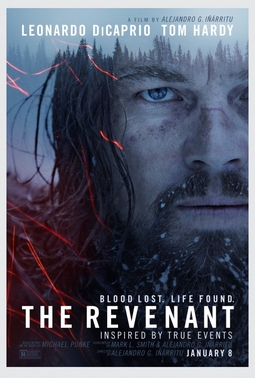
As a fan of not only Leonardo DiCaprio but also of wilderness and survival books and film, I was excited when I happened to see the preview of the film The Revenant while watching another movie several months ago.  The preview made the film look like it would be worth watching, and the small segments they showed of the vast long distance shots displaying the wilderness of the setting captivated me immediately.  It was the historical aspect of the film that really appealed to me however, as I was familiar with the historical event the movie is based upon.

Hugh Glass was a fur trapper and frontiersman in the early 1820’s in the region of the United States that the current states of the Dakotas, Nebraska, and Montana cover.  He joined General William Ashley’s expedition in 1822 up the Missouri River, and while with Ashley’s group narrowly escaped down river after an attack by Arikara Indians.  During the journey he was attacked and mauled by a grizzly bear, and left for dead by Jim Bridger (allegedly) and Thomas Fitzpatrick.  He wasn’t dead though, and eventually made his way back to Fort Kiowa, where he recovered.

The film gets most of what is known about Glass’ ordeal correct – and the bear attack scene itself is astounding, one of the most vicious scenes of that nature I’ve ever seen on film.  The solitude, majesty, and isolation of the deep wilderness is portrayed amazingly well, and the long shots of distant mountains along with the claustrophobic feeling of the dense temperate forests capture the essence of being in the wild perfectly.  DiCaprio’s performance as Glass is simply one of his best film performances ever, and Tom Hardy’s portrayal of Thomas Fitzpatrick is exceptional (despite, of course, the fact that there is little information about the nature of both of their personalities available historically).  The film is a tale of survival in it’s purest form, against not just the harsh, unforgiving wilderness but also against man’s inhumanity to man.  Despite it’s bleak, dark nature, the film is one of the best films I’ve seen in a very long time – akin to the 2011 Liam Neeson film The Grey (in fact, if you liked The Grey, you will certainly like The Revenant).

Interestingly, however, Glass’ real ordeal was in some ways even more astounding than the film portrayed.  His injuries were far worse than those showed in the film – in fact, his back was so damaged that some of his ribs were exposed, and friendly Indians actually sewed bear skin over the injury to protect them.  He crawled – literally – for nearly 100 miles before he made a crude raft which he used to float down the river to Fort Kiowa.  He spent months recovering before he set out on his journey to track down Bridger and Fitzpatrick for revenge.  However, regardless of these factual discrepancies, the film is amazingly good, and I recommend it to anyone who enjoys realistic wilderness films of survival and conflict.

Book Review – The Last Season

I’ve always been an avid reader of outdoors themed stories, both fiction and non-fiction.  Eric Blehm’s novel The Last Season immediately caught my attention when I saw it because I’ve spent quite a bit of time in the backcountry of the Sierra Nevada Mountains, and the story of an experienced Park Ranger disappearing in the summer of 1996 after nearly 30 seasons of service was surprising.

The book is very well written, alternating between excerpts about Randy’s life and how he became a backcountry Park Ranger and the extended search for him in the summer of 1996 after he’d been missing for nearly a week.  Blehm’s writing style is very good; direct, to the point, and informative, he also skillfully weaves the story of Randy’s life and his passions – why the wilderness spoke so loudly to him, and how his love of the wilderness ultimately was part  of the problems he began facing later in his life.  The book also offers a one of a kind glimpse of what it’s like to be a backcountry Park Ranger, which is another reason I picked up the story, as I pursued a possible job doing this very thing in the Sierra’s in the late 1980’s myself (alas, I started working with computers instead).

As someone who is familiar with the Sierra’s, the book really drew me into it as many of the places mentioned in the narrative I’ve been through myself.  It drew me back to a backpacking trip into Cottonwood Lakes I took in 1995 from Horseshoe Meadow near Lone Pine; I climbed my first (and, so far, my only) mountain on that trip – Cirque Peak, at 12,900 feet.  It was one of those trips you never forget.  To have been able to experience things like this every summer, so far away from civilization, would have been something I would have relished greatly – and I greatly admire those, like Randy Morgenson did before he disappeared, who continue to do it every year.  It’s an awesome, wonderful job for those who love it, while at the same time being difficult, sometimes rough, and always filled with hidden danger that requires the Ranger to be on their toes at all times.

For those of you interested in non-fiction stories about personalities and people lost in the wilderness, I cannot recommend this book enough.  It kept me engaged, interested, and turning pages late into the night for over a week.

Book Titles, and What They Say About the Story

Why authors choose the titles of their stories is always something that interests me.  Some give specific thought to the title and what it means, while others pick an idea related to the theme of the story as their title.  Still others simply toss a descriptive title at their novel and let it go at that, the words suggesting the stories main premise.  For many books we never get the thought process behind why the author chose that particular title sadly, because that process can be intriguing.

The title of a book is very important, as it’s generally the first or second thing the potential reader sees along with the cover art.  For established authors, generally their name is enough to drive interest, but for authors still struggling to make a name for themselves it’s the title of their work that grabs attention.  For that reason I generally spend considerable time thinking of what the title of a story I’m writing will be, and in the case of my first book it was a combination of several things.

Initially, the title Isolation’s Mirror no doubt seems odd.  It’s short and at first doesn’t seem to really convey a lot about the story.  As a point of fact, however, it is intended to convey the idea of the major theme of the book at a glance – and that is how isolation generally forces people to reflect upon themselves and their lives.  It forces them to see themselves without the benefit of other people’s opinions or ideas – just like looking into a mirror shows one their true, physical self in stark relief.  In effect, a mirror for the internal self that no one else sees.

In the book, the main characters are thrust into this situation, and there they not only have to contend with this individually, but also must deal with the reactions of how this affects the others around them as well.  The self realizations, the fears, the anger, the self doubt… all these things lead to the central conflict.  How they deal with these things is unique to each of them, and just like life, doesn’t always turn out how they want it to.

Thus, the title of my story in it’s true, naked essence, and one that hopefully gives readers pause as they see it.