The Last Gentleman Adventurer – A Review

518cauhn9el-_sx335_bo1204203200_

I picked this book up when I purchased a bunch of wilderness exploration books several years ago.  The premise of a young English man being sent into the arctic tundra to live with, and trade with, the native people’s in northern Canada was intriguing.  What was even more interesting was the time period that this true story took place – the early 1930’s, when the Hudson Bay Company (referred to as the HBC) was still operating in the northern parts of the Hudson Bay area and northern Canada.

The narrative was written by Edward Beauclerk Maurice, who was only 17 years old when he was hired by the HBC.  Edward narrates his journey across the Atlantic, and his first posting, where he learned the the language of the Inuit natives.  He eventually became trustworthy enough that he was sent deeper into the wilderness to his own post, where he spent the next year alone with Inuit tribes trading furs with barely any contact with the outside world.

The story is unique and well told by Maurice, and offers up a glimpse of life as it was with the Inuit natives prior to their lives being changed by encroaching civilization and technology.  Maurice provides unique perspectives into the everyday lives of these people, and how they interacted with him and treated him.  He eventually became an accepted member of their local society, their trust such that he assisted with local disputes and was considered someone to whom they could bring problems to be solved.  What was amazing about this was that he was – at the time – younger than most of those who deferred to him!

For anyone wishing to read a unique, interesting story about the extreme north of Canada and the tribes that lived their, this is a book I highly recommend.

Survive!: My Fight for Life in the High Sierras – A Review

51k1b-p0q2bl-_sx333_bo1204203200_

Image courtesy of Amazon.com

I happened across this book when I was hunting for stories of real-life survival situations several years ago.  As this story occurred in the same areas I used to hike and camp near in the Sierra Nevada Mountains of S. California, it immediately grabbed my attention.  I bought a hardcover copy of the book and was reading it a few days later.

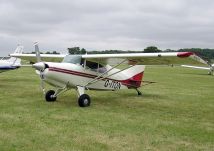
1280px-maule-mx-7-235-superrocket-g-iton-arp

The Maule M7 Bush Plane

Initially, the story gripped me.  The author, Peter DeLeo, was flying his bush plane, a Maule M7, over the Sierra Nevadas near Kern Peak when the aircraft struck the trees and crashed.  He and his two friends were stranded in the wilderness at the onset of winter – DeLeo himself and one of his other passengers sustaining serious injuries (the third passenger had minor injuries).  Despite his injuries, DeLeo decided to hike out and try to find help.  For nearly a week he experienced a grueling trek through the winter mountains before climbing down the foothills of Olancha Peak and reporting his situation with a phone call from the Ranch House Cafe in Olancha (where, incidentally, I’ve eaten a few times).

Another reason this story attracted me was due to my own interest in aviation and, in particular, bush flying.  It was this interest that started to make me consider the story in a less than favorable light as the narrative continued.

To be sure, DeLeo’s account is nothing short of astounding.  That he managed to survive across the mountainous wilderness for a week with serious injuries is amazing, and he deserves credit for this feat.  The writing itself can sometimes be self aggrandizing; he tends to dwell occasionally on his exploits (perhaps rightfully so).  However, some of the choices that he made started making me question the logic behind them.  And, since this was an aircraft crash, the National Transportation Safety Board had the report of its investigation available in its database for perusal.  As such, to see what their investigation found, I read the report, prompted by another reader on Amazon’s review section of the book who had done the same.

I won’t go into the details here, other than to say that DeLeo’s story and the NTSB report don’t match (as far as the details about the actual crash of the aircraft go).  Sadly, this made me suspect much of the rest of the story also.  I’m not sure why the author would publish a story of his experience that included information that was contrary to a published report of the crash investigation, but whatever his reasons it certainly makes one reconsider the events of the book as one continues to read.

Nonetheless, the story of DeLeo’s survival in and of itself is still interesting.  As somewhat of a survivalist himself, he goes into some detail occasionally on how and why he does some of the things he does to escape the cold and the elements.  It’s worth a read simply for that aspect alone, and for those interested in true stories of survival I recommend it.