The Last Gentleman Adventurer – A Review

518cauhn9el-_sx335_bo1204203200_

I picked this book up when I purchased a bunch of wilderness exploration books several years ago.  The premise of a young English man being sent into the arctic tundra to live with, and trade with, the native people’s in northern Canada was intriguing.  What was even more interesting was the time period that this true story took place – the early 1930’s, when the Hudson Bay Company (referred to as the HBC) was still operating in the northern parts of the Hudson Bay area and northern Canada.

The narrative was written by Edward Beauclerk Maurice, who was only 17 years old when he was hired by the HBC.  Edward narrates his journey across the Atlantic, and his first posting, where he learned the the language of the Inuit natives.  He eventually became trustworthy enough that he was sent deeper into the wilderness to his own post, where he spent the next year alone with Inuit tribes trading furs with barely any contact with the outside world.

The story is unique and well told by Maurice, and offers up a glimpse of life as it was with the Inuit natives prior to their lives being changed by encroaching civilization and technology.  Maurice provides unique perspectives into the everyday lives of these people, and how they interacted with him and treated him.  He eventually became an accepted member of their local society, their trust such that he assisted with local disputes and was considered someone to whom they could bring problems to be solved.  What was amazing about this was that he was – at the time – younger than most of those who deferred to him!

For anyone wishing to read a unique, interesting story about the extreme north of Canada and the tribes that lived their, this is a book I highly recommend.
The Revenant – and my take on it

the_revenant_2015_film_poster

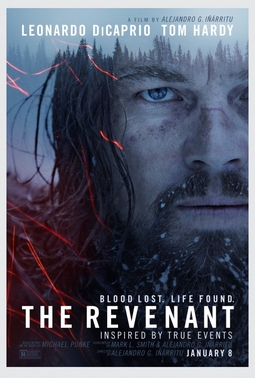
As a fan of not only Leonardo DiCaprio but also of wilderness and survival books and film, I was excited when I happened to see the preview of the film The Revenant while watching another movie several months ago.  The preview made the film look like it would be worth watching, and the small segments they showed of the vast long distance shots displaying the wilderness of the setting captivated me immediately.  It was the historical aspect of the film that really appealed to me however, as I was familiar with the historical event the movie is based upon.

Hugh Glass was a fur trapper and frontiersman in the early 1820’s in the region of the United States that the current states of the Dakotas, Nebraska, and Montana cover.  He joined General William Ashley’s expedition in 1822 up the Missouri River, and while with Ashley’s group narrowly escaped down river after an attack by Arikara Indians.  During the journey he was attacked and mauled by a grizzly bear, and left for dead by Jim Bridger (allegedly) and Thomas Fitzpatrick.  He wasn’t dead though, and eventually made his way back to Fort Kiowa, where he recovered.

The film gets most of what is known about Glass’ ordeal correct – and the bear attack scene itself is astounding, one of the most vicious scenes of that nature I’ve ever seen on film.  The solitude, majesty, and isolation of the deep wilderness is portrayed amazingly well, and the long shots of distant mountains along with the claustrophobic feeling of the dense temperate forests capture the essence of being in the wild perfectly.  DiCaprio’s performance as Glass is simply one of his best film performances ever, and Tom Hardy’s portrayal of Thomas Fitzpatrick is exceptional (despite, of course, the fact that there is little information about the nature of both of their personalities available historically).  The film is a tale of survival in it’s purest form, against not just the harsh, unforgiving wilderness but also against man’s inhumanity to man.  Despite it’s bleak, dark nature, the film is one of the best films I’ve seen in a very long time – akin to the 2011 Liam Neeson film The Grey (in fact, if you liked The Grey, you will certainly like The Revenant).

Interestingly, however, Glass’ real ordeal was in some ways even more astounding than the film portrayed.  His injuries were far worse than those showed in the film – in fact, his back was so damaged that some of his ribs were exposed, and friendly Indians actually sewed bear skin over the injury to protect them.  He crawled – literally – for nearly 100 miles before he made a crude raft which he used to float down the river to Fort Kiowa.  He spent months recovering before he set out on his journey to track down Bridger and Fitzpatrick for revenge.  However, regardless of these factual discrepancies, the film is amazingly good, and I recommend it to anyone who enjoys realistic wilderness films of survival and conflict.

Book Review – The Last Season

I’ve always been an avid reader of outdoors themed stories, both fiction and non-fiction.  Eric Blehm’s novel The Last Season immediately caught my attention when I saw it because I’ve spent quite a bit of time in the backcountry of the Sierra Nevada Mountains, and the story of an experienced Park Ranger disappearing in the summer of 1996 after nearly 30 seasons of service was surprising.

The book is very well written, alternating between excerpts about Randy’s life and how he became a backcountry Park Ranger and the extended search for him in the summer of 1996 after he’d been missing for nearly a week.  Blehm’s writing style is very good; direct, to the point, and informative, he also skillfully weaves the story of Randy’s life and his passions – why the wilderness spoke so loudly to him, and how his love of the wilderness ultimately was part  of the problems he began facing later in his life.  The book also offers a one of a kind glimpse of what it’s like to be a backcountry Park Ranger, which is another reason I picked up the story, as I pursued a possible job doing this very thing in the Sierra’s in the late 1980’s myself (alas, I started working with computers instead).

As someone who is familiar with the Sierra’s, the book really drew me into it as many of the places mentioned in the narrative I’ve been through myself.  It drew me back to a backpacking trip into Cottonwood Lakes I took in 1995 from Horseshoe Meadow near Lone Pine; I climbed my first (and, so far, my only) mountain on that trip – Cirque Peak, at 12,900 feet.  It was one of those trips you never forget.  To have been able to experience things like this every summer, so far away from civilization, would have been something I would have relished greatly – and I greatly admire those, like Randy Morgenson did before he disappeared, who continue to do it every year.  It’s an awesome, wonderful job for those who love it, while at the same time being difficult, sometimes rough, and always filled with hidden danger that requires the Ranger to be on their toes at all times.

For those of you interested in non-fiction stories about personalities and people lost in the wilderness, I cannot recommend this book enough.  It kept me engaged, interested, and turning pages late into the night for over a week.

In Praise of Float Planes

Flying in small planes is something that many people have never had the opportunity to experience.  I was lucky in that regard.  A friend of the family in Alaska had a small aircraft – a Cessna I believe (as I was too spellbound at the time to recall what it was) – that he took us up in a few times when he was scouting for moose outside Fairbanks.  These experiences are the water that germinated the root of my love for planes, and in particular of bush aircraft.  And no bush plane captures the essence of bush flying like float planes.

summer-14-cruise-158

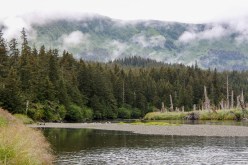
Rocky River – Courtesy of https://seagrant.uaf.edu

For the last two years my brother and I spent summers with our father, we flew into a remote area of the Kenai Peninsula called Rocky Bay.  The area had been a logging zone for years, but in the early ’80’s a torrential rainstorm had washed out the road over the pass.  The next 8 years allowed the forest to begin to regrow and wildlife to return to the valley.  The river that ran down into the bay from the mountains, Rocky River, had one of the best silver salmon runs in the entire area, and we spent considerable amounts of time in there.  Because of the road being washed away, the only way into the bay was to fly in via float plane.

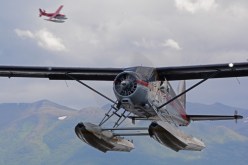
Small planes are wonderful alone – I’ve been in many, and for a while (prior to the market crash of 2008) I was on the path to getting a pilot’s license myself.  The float plane we flew into Rocky Bay in however was an old DHC2 Beaver.  The old radial engine in that beast simply roared and rattled the entire aircraft (I’ve always been amused by films that show people talking inside radial engine planes without a headset – impossible).  It purred once we reached altitude and cruised across Katchemak Bay toward the mountains.  A beautiful aircraft.

The real beauty of float planes however is in their versatility, and the capability of reaching places that are simply impossible to reach any other way.  For those who really want to get away from civilization, there’s no substitute.  A typical trip has the bush pilot fly the passengers out with their gear, and once they are they, they are there for good until the pilot returns at the appointed time.  The flight to the drop off point is always stunning, as the landscape being flown over is generally wild and untamed.  Landings, particularly in calm water, are equally amazing; the aircraft settles languidly onto the surface, accompanied by the hiss of the water from the floats.  Once the speed drops, the plane settles into the water, gently rocking as the pilot maneuvers toward the shore.  It’s something one never forgets.

Without a float plane, some of the trips my father, brother, and I took would have been impossible.  For years I aspired to become a bush pilot and fly my own float plane, but alas, I decided to get into the IT industry instead (well, some may say I fell into it, but I digress…).

You might be asking what this has to do with my writing.  Well, a lot, actually.  The flights I took in float planes inspired me on many levels, and much of the writing I’ve done over the years includes planes in some form or another.  The novel I’m currently working on, Isolation’s Mirror, has as a main plot device a bush plane that crashes in the wilderness, and the issues surrounding the aircraft, and it’s pilot, create further plot devices that create additional conflict.  Without that love of bush planes, that novel might not have been written.